In clinical a dental practice, procedures using bonding are vital. Previously, each substrate required individual treatment, however, recent technological innovations have now facilitated the development of multi-use products that are compatible with most substrate. These multi-use products are gradually being integrated into the clinical practices.
The versatility of being able to use these products for multiple purposes means not only simplifies the previously complex process required for each substrate but also reduces the factors contributing to poor bonding (defects) caused by practitioner error.
Nonetheless, despite being a universal bonding system, its clinical implementation would be cautious unless the bond strength and durability are proven reliable. Recent research demonstrates that its performance is equivalent to, or exceeds, conventional products, and of course, it has been confirmed that there is no adverse effect to the dental pulp. If “easier, shorter, and more reliable bonding” can be achieved, clinicians will want to incorporate it into their clinical practice.
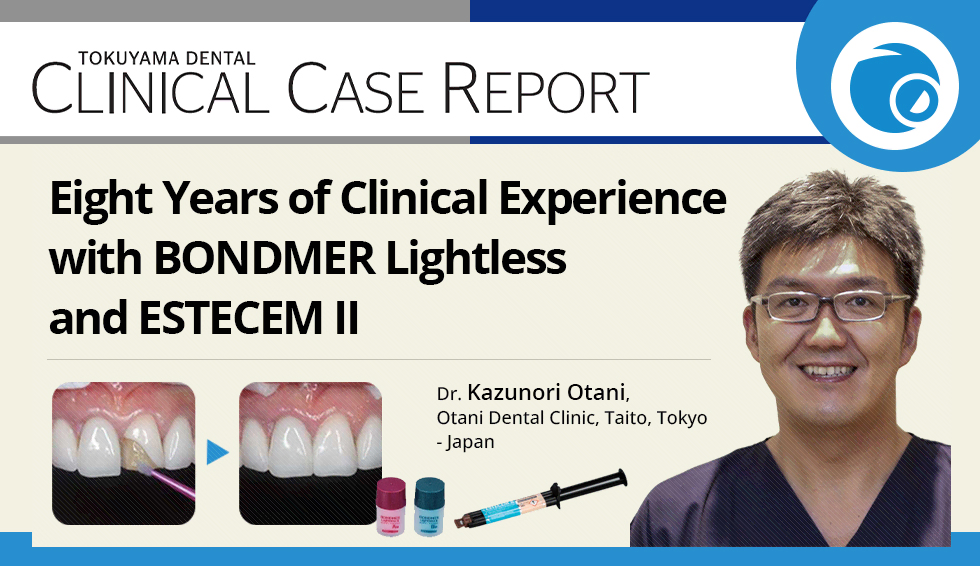
Several cases will be exhibited using “BONDMER Lightless,” a new bonding system developed by Tokuyama Dental that is compatible with any substrate, requires no processing time after application, and eliminates the need for light irradiation
CASE 1 #46: Direct composite resin restoration
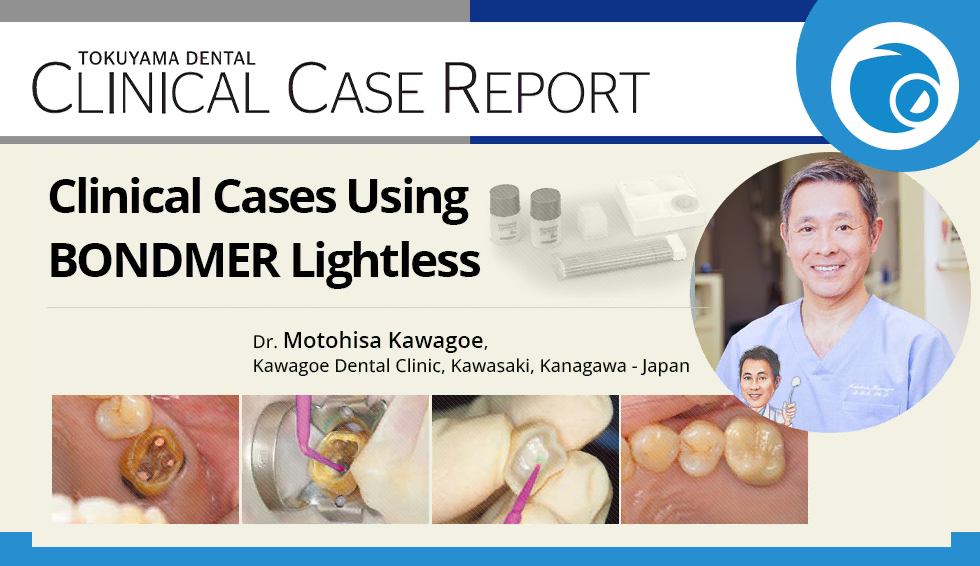
A restoration plan was formulated due to poor marginal fit of the #46 Class II metal inlay. After the metal inlay was removed and stained carious dentin was carefully eliminated, a composite resin restoration was requested. Considering the limited opening and the extensive nature of the Class II molar restoration, BONDMER Lightless was chosen to achieve a reliable bond quickly. This procedure involved using the rubberdam dry field technique with composite resins ESTELITE UNIVERSAL FLOW and ESTELITE ASTERIA.
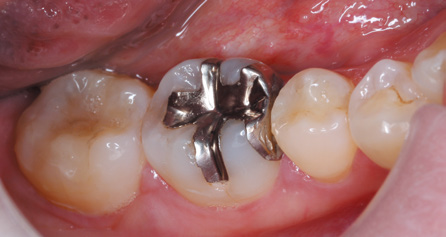
Fig.1 Preoperative condition. Poor fitting of metal inlay margin was found and restoration was planned.
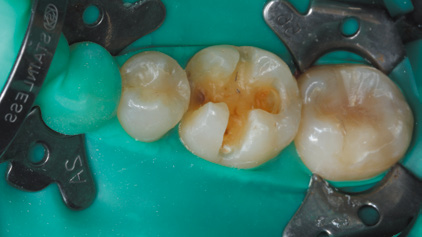
Fig.2 Metal inlay was removed, carious dentin was stained and carefully removed, and direct restoration was performed using rubberdam dry field technique.
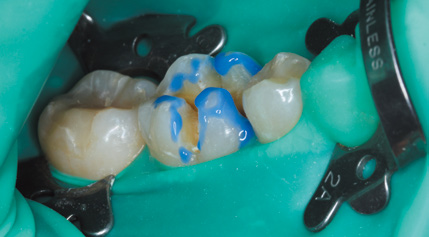
Fig.3 Selective etching of enamel was performed to better ensure bonding to enamel. After processing, the area was rinsed thoroughly with water. Incidentally, BONDMER Lightless can be used for both etch-and-rinse and self-etching.
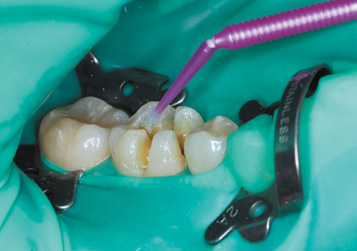
Fig.4 BONDMER Lightless was applied to the entire cavity and air blowing was ensured to be carried out. Although the two liquids must be mixed in advance, there is no processing time and no need for light curing, resulting in a shortening of the time required.
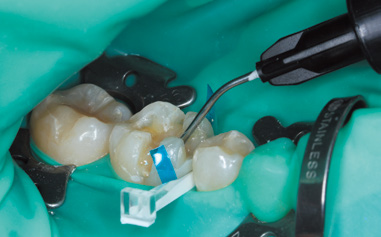
Fig.5 Matrix placement and crown separation were ensured, after which lining with the flowable UNIVERSAL FLOW High and Medium was performed and resin paste was filled.
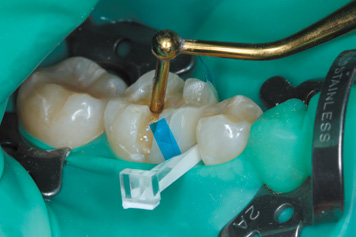
Fig.6 ASTERIA paste of composite resin was applied to the adjacent and occlusal surfaces, and the color and morphology were adjusted.
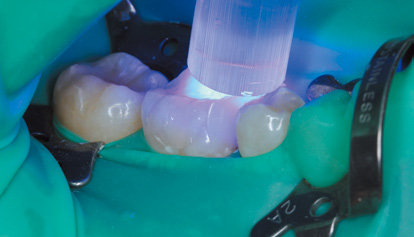
Fig.7 After the filling operation, light curing was performed thoroughly using a light illuminator with sufficient light intensity.
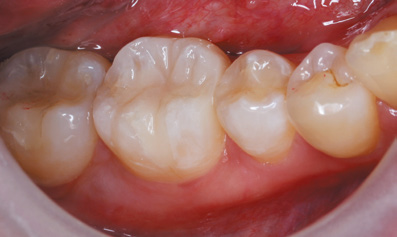
Fig.8 After morphological correction and occlusal adjustment using a carbide bur, polishing was performed according to the usual method to complete the procedure. The postoperative course was favorable without the occurrence of any discomfort.
CASE 2 #47 Fiber post-core construction (direct method)
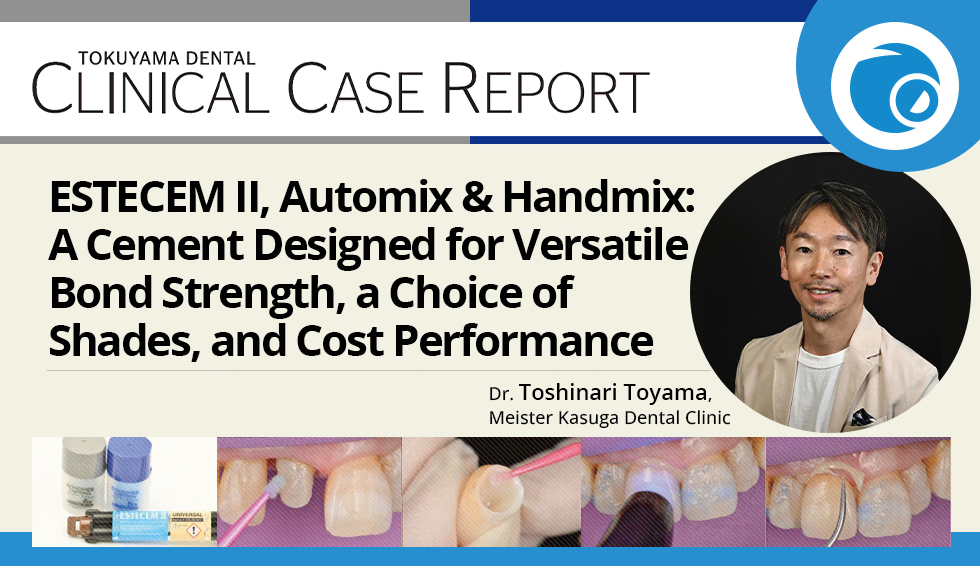
After the root canal treatment was completed, given the thin residual tooth structure, a direct core build-up using a fiber post was recommended to avoid root fracture by firmly bonding to the tooth and creating a single mass. After preparing the post-hole, a fitting of fiber post, followed by bonding operation is performed.
Utilizing the multi-use benefits of the system, simultaneous processing of the fiber post and tooth structure simplifies the process and reduces treatment time. Furthermore, it is highly beneficial for both the clinicians and patient that the solution ensures reliable polymerization in areas with limited light access, such as within root canals, and allows for immediate post-construction and tooth preparation without delay.
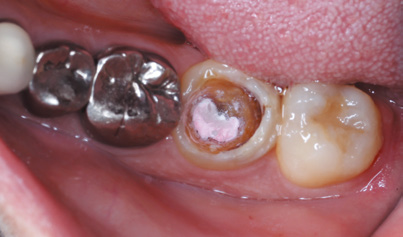
Fig.1 Condition after the completion of root canal treatment.
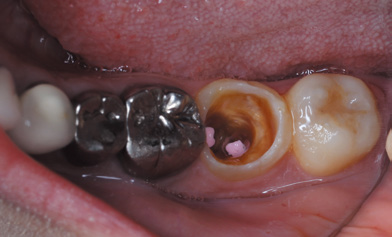
Fig.2 The residual tooth substance became very thin when the carious dentin was removed while staining. Consent was obtained for a direct core build-up using a fiber post to avoid root fracture.
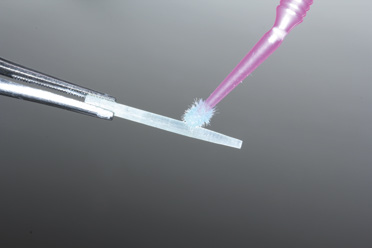
Fig.3 BONDMER Lightless was applied to the entire surface of the fiber post after trial fitting. Priority was given to ease of operation without prior cutting.
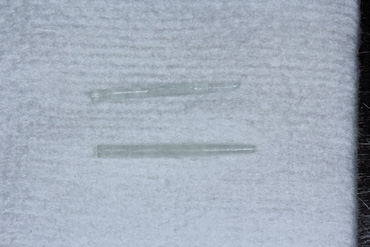
Fig.4 Condition of fiber post after processing. After applying, air blowing was ensured to be carried out, leaving a glossy finish on the surface.
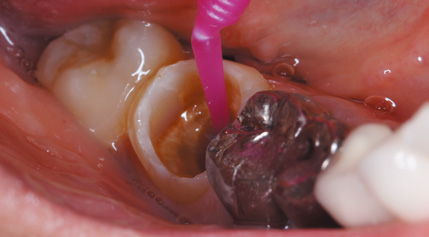
Fig.5 BONDMER Lightless was applied inside the root canal, and air blowing was ensured to be carried out to enhance the bonding strength. If performed at the same time as the fiber post processing, it will shorten the time.
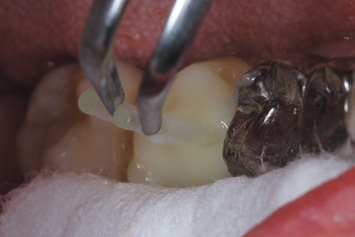
Fig.6 The core resin was filled into the prepared root canal, then a fiber post was inserted at the proper position and light curing was performed.
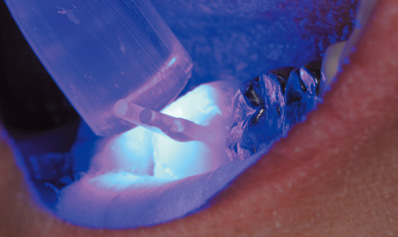
Fig.7 After the post and core were built up, polymerization curing was performed by irradiation from various angles for a sufficient time using a light illuminator with appropriate light intensity.
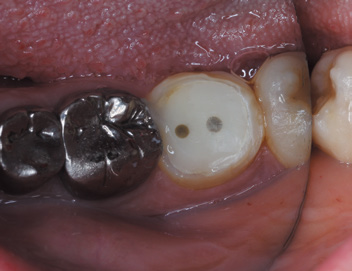
Fig.8 After light curing, the protruding fiber post can be immediately cut and removed for tooth preparation.
CASE 3 #11 and #21: Crown repair with composite resin and ceramics
The patient came to the clinic with a chief concern of esthetic dissatisfaction with the upper anterior teeth. Since the cervical line was uneven but the gum line was not visible, it was determined that after whitening, a direct restoration using composite resin for #11 and an indirect crown restoration using zirconia ceramics for #21 would be the best course of treatment.
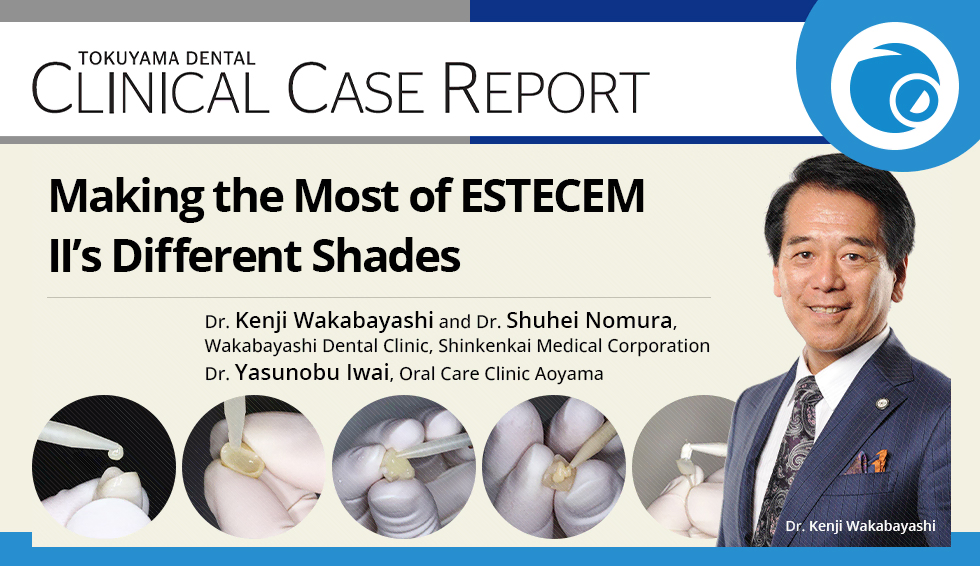
Even when combining direct and indirect restorations, as in this case, choosing the multi-use bonding agent, BONDMER Lightless reduces the materials and steps used, eliminating confusion and improving efficiency for the practitioner and staff. As a result, it is believed that everyone can approach clinical practice with greater focus. Moreover, ESTECEM II resin cement allows for easy removal of excess cement and provides ample working time, allowing for relaxed and controlled removal without being rushed. This makes it a resin cement that is easy to control.
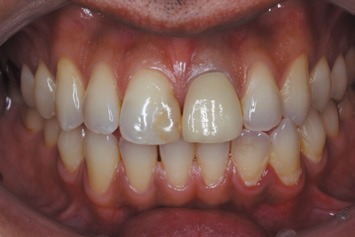
Fig.1 The patient came to the clinic with a chief complaint of esthetic dissatisfaction to the anterior teeth region. Direct restoration was planned for #11 and indirect crown restoration for #21.
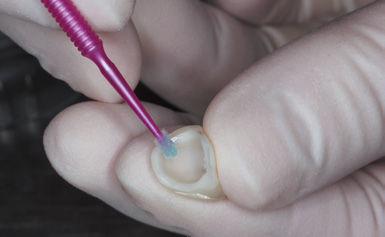
Fig.2 The color tone and form of the zirconia ceramic crown, which was an indirect restoration, were adjusted, and after sandblasting (alumina 50 μm), the inner surface was processed with BONDMER Lightless.
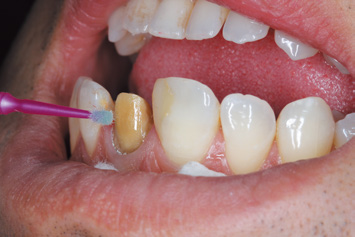
Fig.3 After cleaning the tooth surface, processing of the tooth surface with BONDMER Lightless was performed at the same time as crown processing. After application, air blowing was performed to complete the pre-processing.
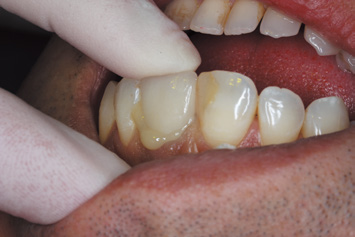
Fig.4 Crown was cemented with ESTECEM II resin cement. Excess cement should be removed with a short period of light curing (2 to 3 seconds) for temporary polymerization, and great care should be taken to ensure that no excess cement is left behind. Final photopolymerization was performed after confirmation.
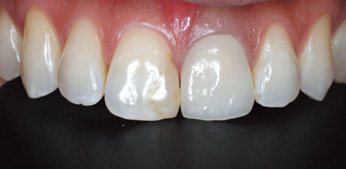
Fig.5 Condition after the margin area of #21 was confirmed under magnification and polishing was completed. Next, transition to direct crown restoration for tooth #11.
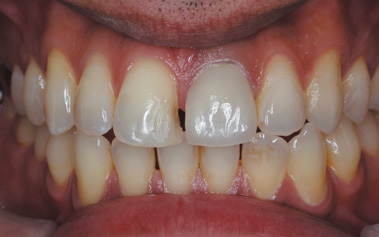
Fig.6 Condition after removal of ill-fitting restoration. The enamel was beveled and selectively etched with phosphoric acid.
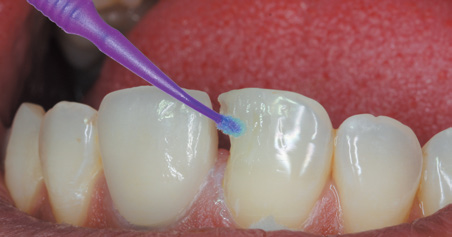
Fig.7 After etching, rinsing with water and drying, the entire tooth surface was coated with a two-component mixture of BONDMER Lightless, and the bonding process was completed by performing air blowing sufficiently without waiting.
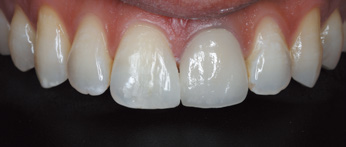
Fig.8 After matrix placement, etc., lining was performed with flow-type ESTELITE UNIVERSAL FLOW High, and the composite resin paste ESTELITE® SIGMA QUICK was filled, followed by photopolymerization, morphological correction, and polishing to complete the procedure.
“PALFIQUE UNIVERSAL FLOW” is sold in Japan under the name “ESTELITE UNIVERSAL FLOW”, “PALFIQUE ASTERIA” is sold as “ESTELITE ASTEIA”, “ESTECEM Plus” is sold as “ESTECEM II” and “PALFIQUE LX5” is sold as “ESTELITE® SIGMA QUICK”.