Restorative treatment today is supported by rapid advances in equipment and restorative materials, including adhesives, which has led to a constant stream of products based on new concepts. As dentists, we must regularly update not only our treatment techniques but our knowledge of these new material properties in order to provide care that meets individual patient needs.
I have used this product frequently in daily clinical practice for nearly eight years, from BONDMER Lightless (the predecessor to BONDMER Lightless II) to the present, in every case requiring bonding, including the placement of restorations across a range of materials (zirconia ceramics, glass ceramics, and metal), direct bonding, fiber cores, and many other repair procedures.
I imagine quite a few of the dentists reading this find it cumbersome to use several different treatment agents to perform the proper bonding procedures (such as pretreatment) for each of the different materials (particularly zirconia ceramics and glass ceramics) when placing ceramic restorations.
Before this product was released, I also often found the bonding process cumbersome. However, using BONDMER Lightless, which allows the same adhesive to be used for all materials through simple steps, reduces stress for both the practitioner and their staff and also shortens chair time.
Beyond this simplicity and multi-purpose use, this product also has high bond strength that withstands harsh intraoral conditions, contributing to favorable long-term prognoses (Figs. 1, 2).
In this article, the long-term prognoses of cases treated using BONDMER Lightless and ESTECEM II are presented in Cases 1, 2, and 3.
CASE 1: Two-Year Follow-Up of Direct Bonding and Zirconia Inlay in the Molar Region
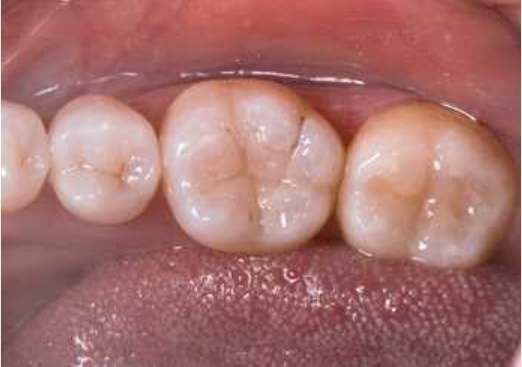
Fig. 1 Condition of #46 (Class I complex cavity) and #47 (Class I simple cavity) two years after restoration using BONDMER Lightless as the bonding agent and ESTELITE ASTERIA (shade: OCE) as the filling material. The bonding interface of #46 remains in good condition, with only slight discoloration observed.
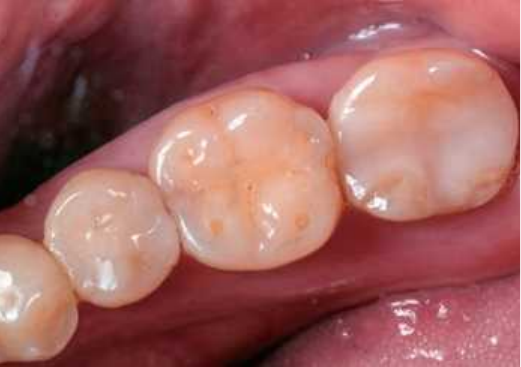
Fig. 2 Condition of #35 and #37 (both MOD cavities) two years after placement of zirconia inlays. As with the case of direct bonding in Fig. 1, the interface between the zirconia inlays and enamel remains in good condition, with only slight discoloration observed.
CASE 2: Composite Resin Repair of a Fractured Ceramic Crown
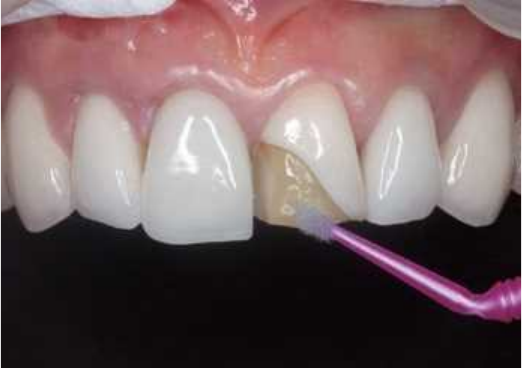
Fig. 3 August 2017. BONDMER Lightless was applied after cleaning, followed by air blowing.
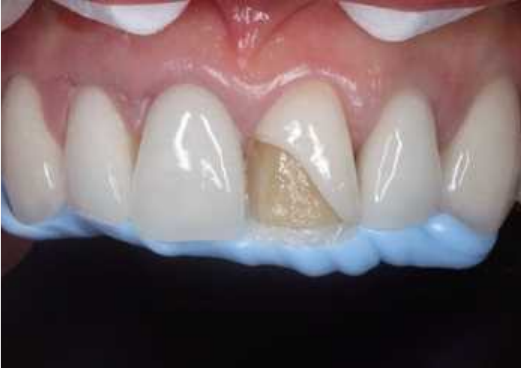
Fig. 4 Filling was performed starting from the incisal edge using a silicone guide (ESTELITE UNIVERSAL FLOW (M) BW).
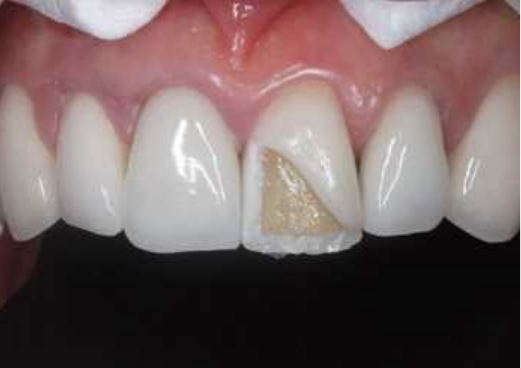
Fig. 5 Next, the proximal surface was filled (ESTELITE UNIVERSAL FLOW (M) BW).
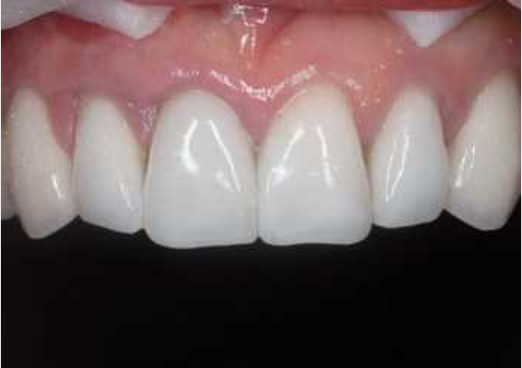
Fig. 6 Finally, the labial surface was filled (ESTELITE® SIGMA QUICK BW, CE) and polished.
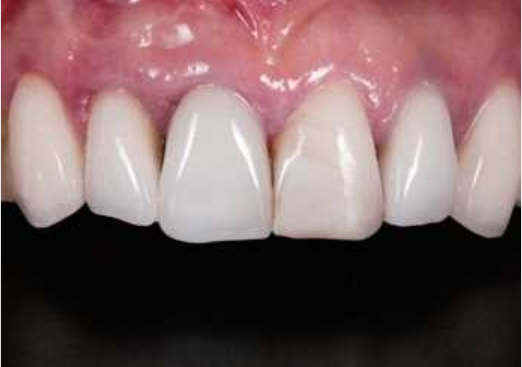
Fig. 7 May 2024, eight years after the repair. Several rounds of polishing with a silicone point have been performed to date, but there has been no debonding, and progress has been favorable.
CASE 3: Zirconia Crown Treatment for a Patient Presenting with Esthetic Dissatisfaction of #21 and #22
Patient: 44-year-old female;
first visit: April 2017;
placement date: August 2017
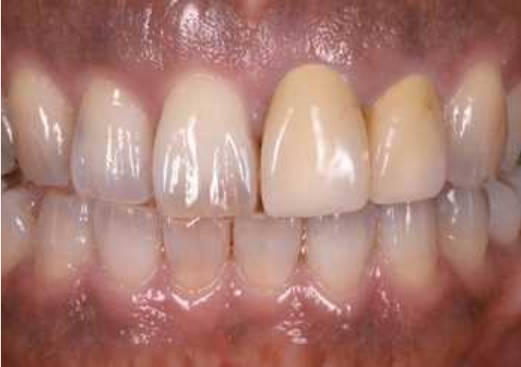
Fig. 8 Preoperative condition. Porcelain-fused-to-metal crowns on #21 and #22 show a color mismatch.
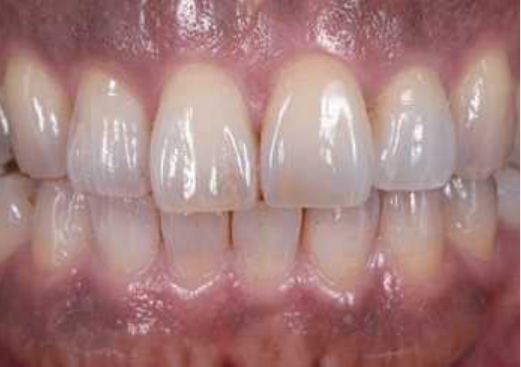
Fig. 9 November 2017. Zirconia crowns were placed on #21 and #22 using BONDMER Lightless and ESTECEM II. 3 months postoperative.
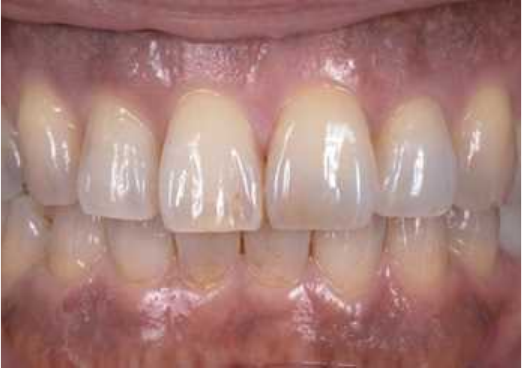
Fig. 10 April 2019, 1 year 8 months after placement.
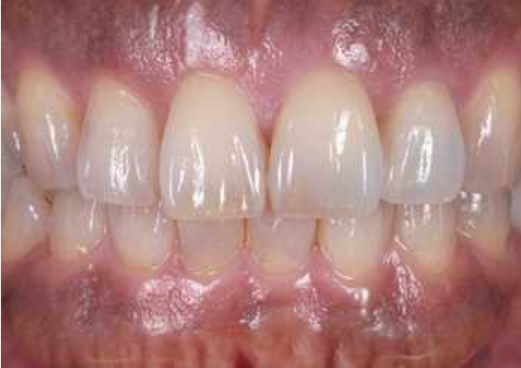
Fig. 11 April 2020, 2 years 8 months after placement.
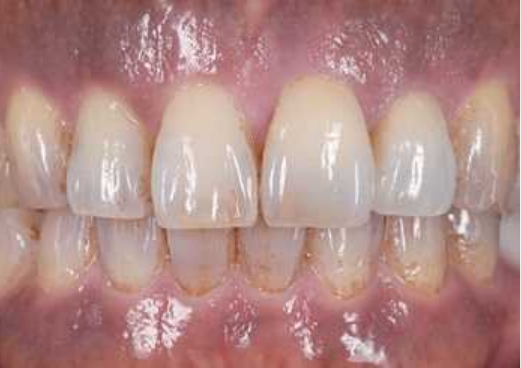
Fig. 12 April 2024, 6 years 8 months after placement. Maintenance has been performed every four months, with no debonding or other issues, and progress has remained favorable.