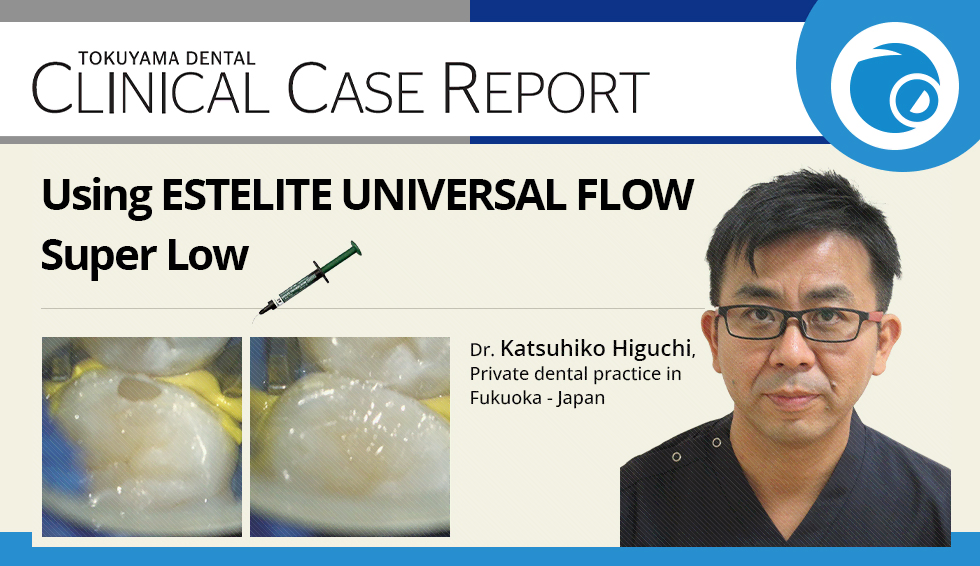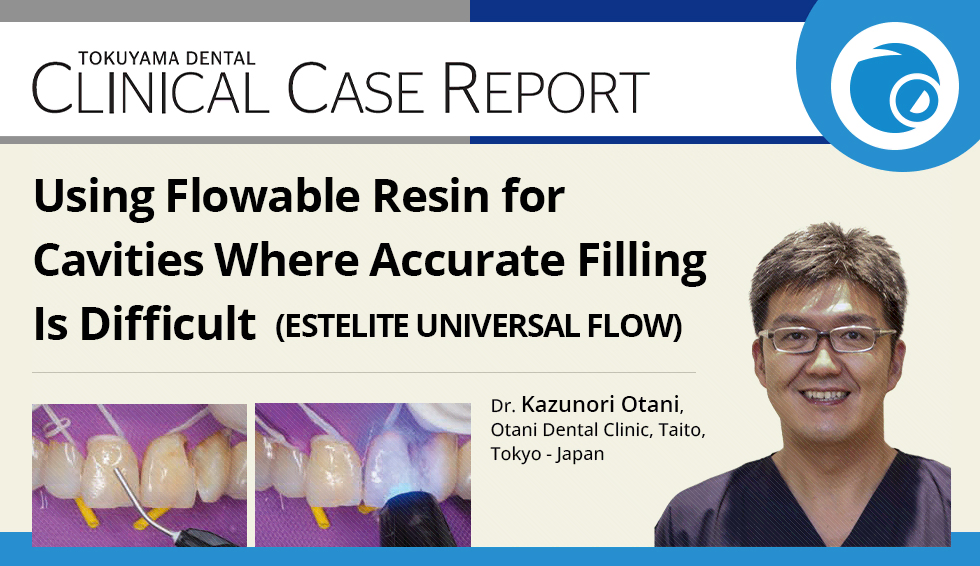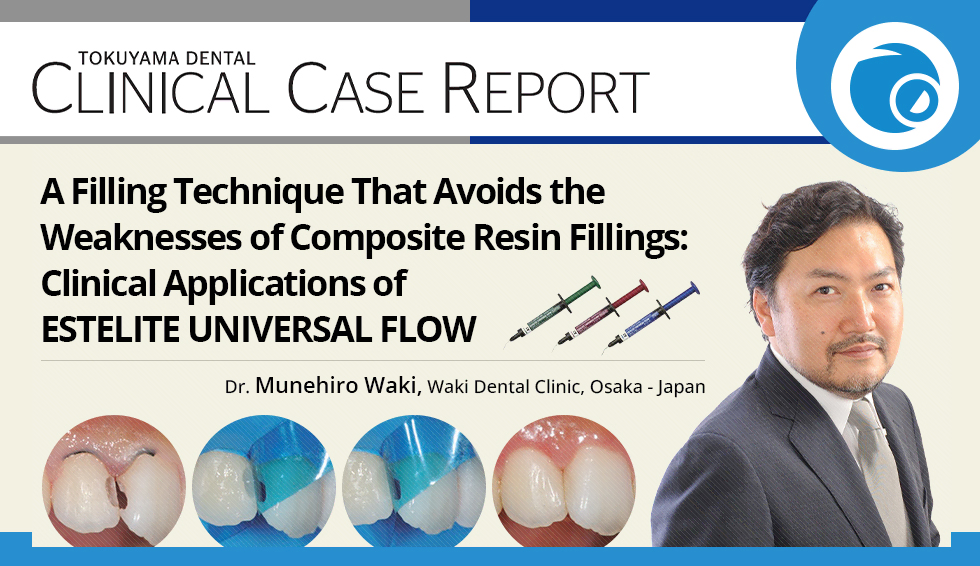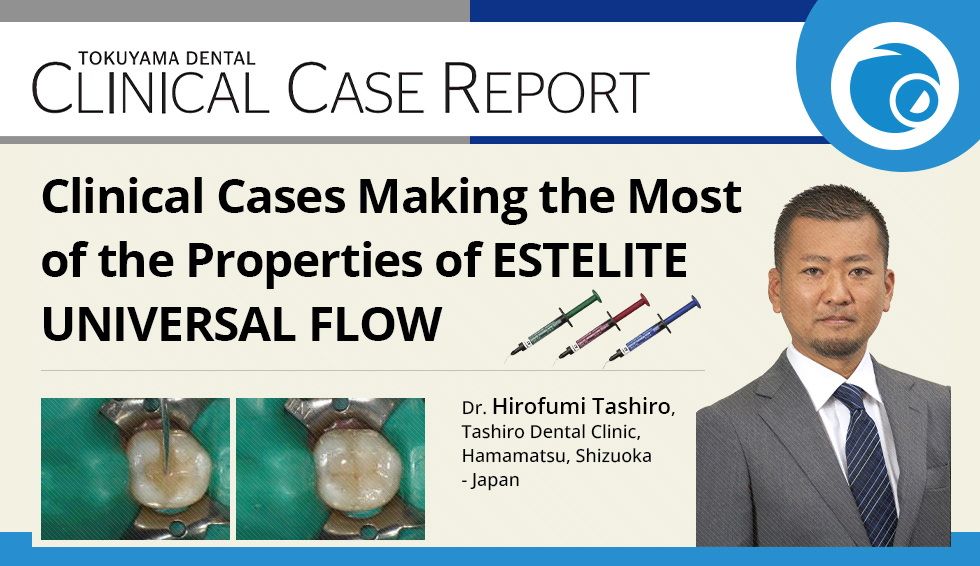
Advances and developments in composite resin (CR) properties and restoration techniques have made it possible to perform CR restorations in cases that were previously done using indirect methods. Among these, the significant improvements in the properties and color tone compatibility of flowable CR have made it possible to perform cases that were previously done with paste-type CR using only flowable CR.
In this article, we report a case where the three different flowabilities of ESTELITE UNIVERSAL FLOW were utilized to fabricate a matrix before endodontic therapy, and a case where a cavity in the distal cervical area of the mandibular second molar was filled.
CASE 1 Matrix fabrication for rubberdam isolation technique (High/Super Low)
When endodontic therapy is performed rubber dam isolation technique is used. But for teeth that have lost the coronal tooth structure, clamps cannot be placed, so a matrix needs to be fabricated. Isolation was performed using ZOO (APT). After the bonding procedure with TOKUYAMA BOND FORCE II, ESTELITE UNIVERSAL FLOW High, which has high wettability and good cavity adaptation, was used for the first layer of the restoration. For the second and subsequent layers, ESTELITE UNIVERSAL FLOW Super Low, which has reduced flowability and excellent formability, is used to fabricate the matrix in a coiled manner. In this process, instead of filling all at once, light-curing was performed thoroughly after each complete round. After filling to a sufficient height to allow the clamp to be attached, ESTELITE UNIVERSAL FLOW High was applied once more at the boundary between the matrix and the tooth structure to prevent the matrix from dislodging due to the force of the clamp.
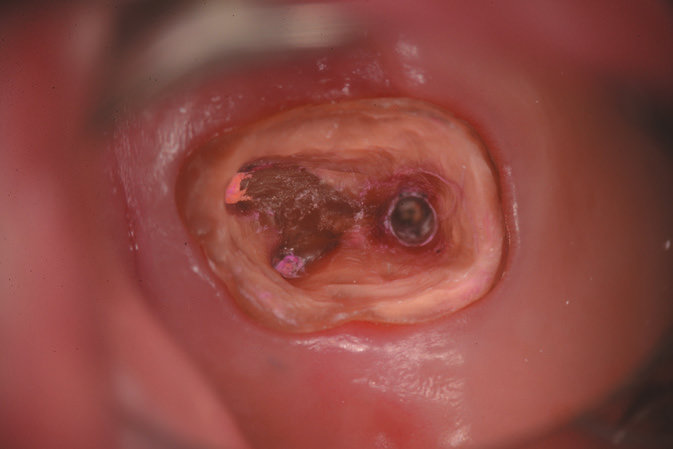
Fig.1 Before performing the root canal treatment, the crown and core were removed, and the infected dentin was eliminated. The tooth was almost in a root stump condition, making the rubber dam isolation technique impossible in its current state.
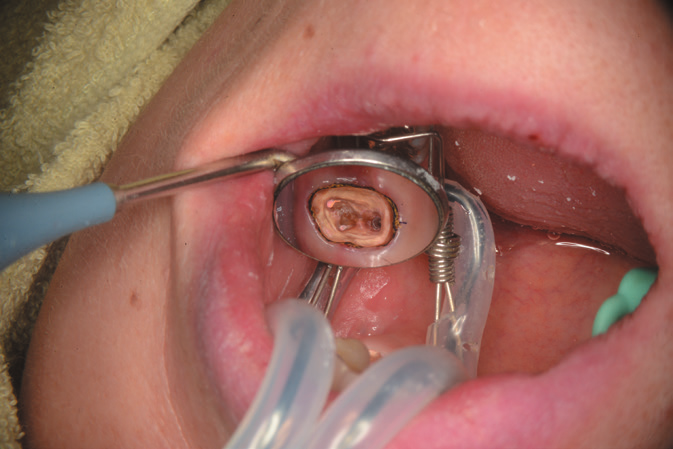
Fig.2 Gingival retraction was performed displacing the gingiva. ZOO (APT) was applied for isolation, ensuring thorough pre-treatment.
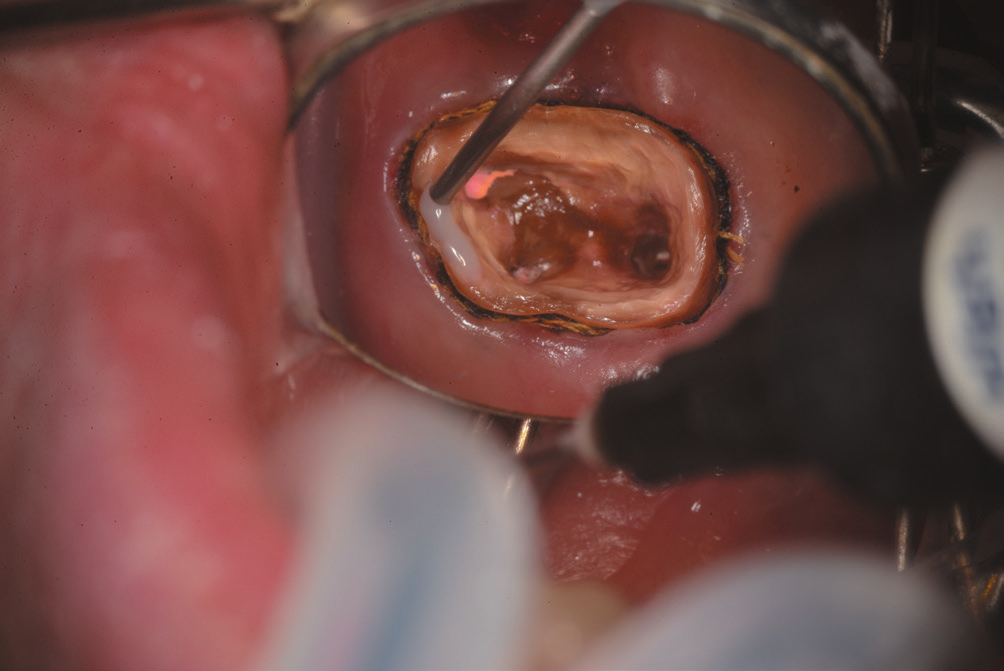
Fig.3 ESTELITE UNIVERSAL FLOW High (A1), which has high wettability and good adaptation to the tooth structure, was used first. The A1 shade is chosen for its high light transmission, allowing light to reach the uncured layer at the surface of the bonding material.
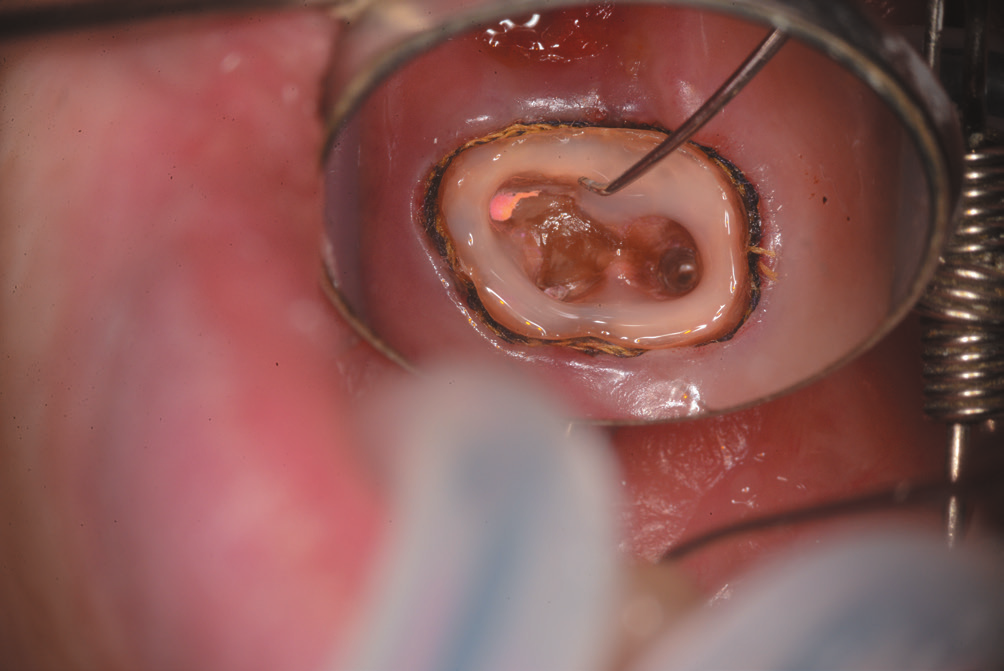
Fig.4 ESTELITE UNIVERSAL FLOW High was extended to the side walls using an explorer.
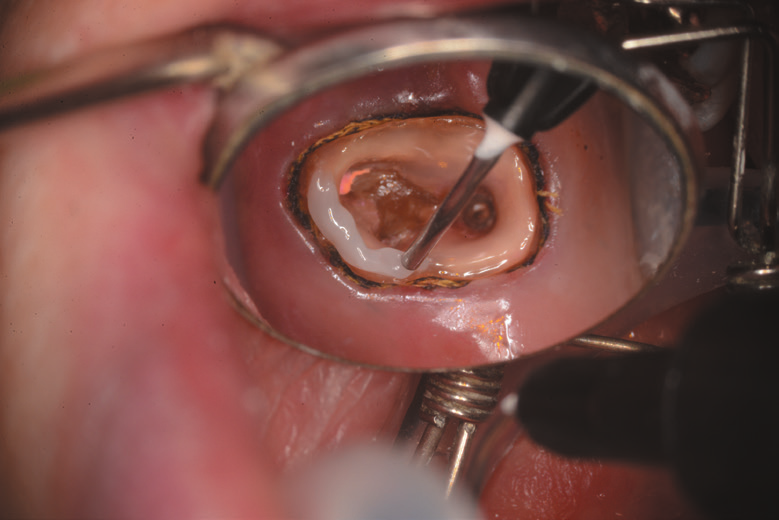
Fig.5 The matrix was fabricated using ESTELITE UNIVERSAL FLOW Super Low (A1), which has low flowability and is easy to shape.
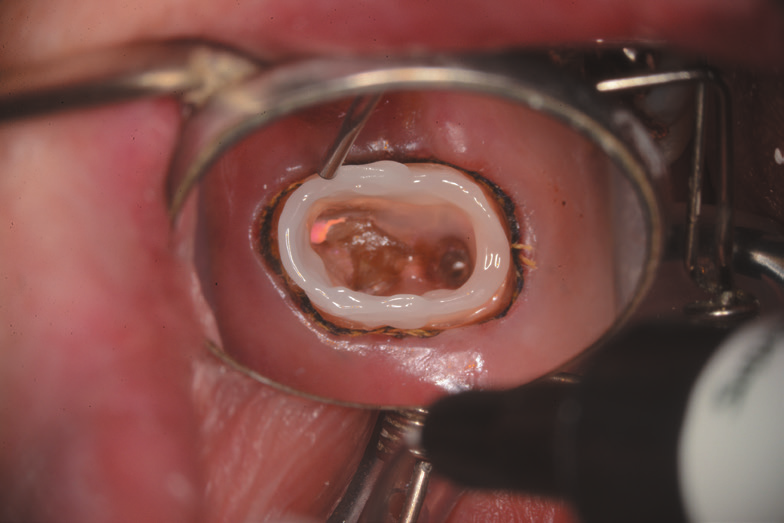
Fig.6 The filling was layered in a coiled manner.
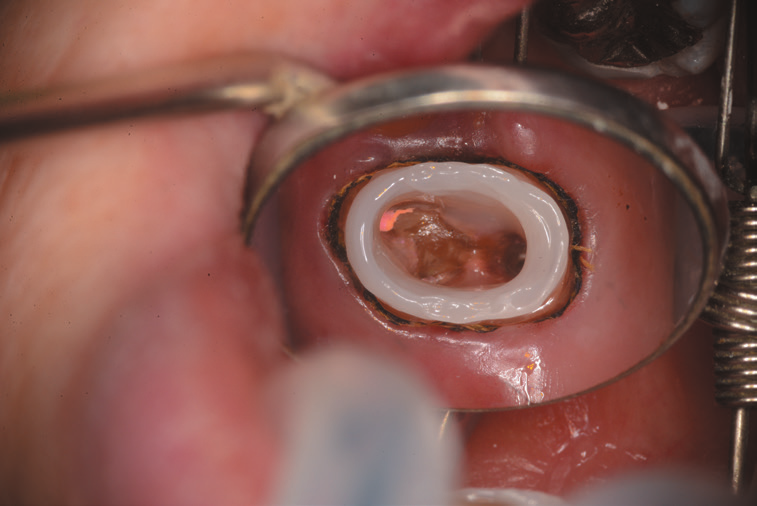
Fig.7 Matrix fabrication completed.
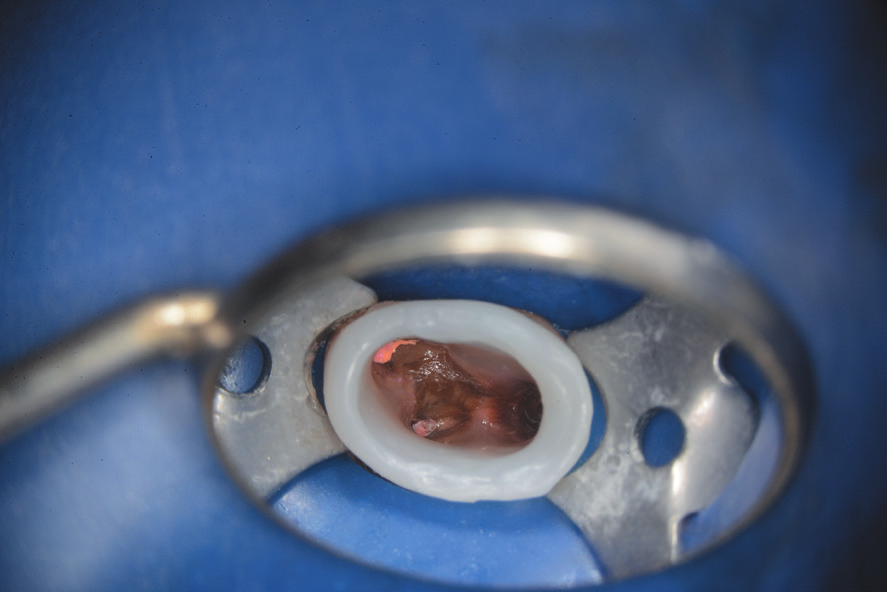
Fig.8 The clamp can now be placed, ensuring effective rubber dam isolation technique.
CASE 2 Filling the cavity in the distal cervical area of the second molar (High/Medium)
It is not uncommon in clinical practice to observe caries on the distal cervical area of the second molar caused by the mesially inclined third molar. In such cases, restoring with a metal inlay can result in a significant loss of tooth structure and may cause post operative pain. Additionally, because the distal cavity is deep, impression taking becomes difficult, and achieving a good fit at the margin for the dental technician during the procedure also becomes very challenging. In this case, the restoration was performed with composite resin with minimal invasion. Although filling the distal cervical area of the second molar is very challenging, ESTELITE UNIVERSAL FLOW Medium with moderate flowability was carefully placed under an enlarged view with a microscope to avoid excess material from overflowing the cavity. ESTELITE UNIVERSAL FLOW has a non-sticky consistency with minimal stringiness and is non-slumping, making it very effective in cases like this one, where the cavity is deep and close to the gingiva.
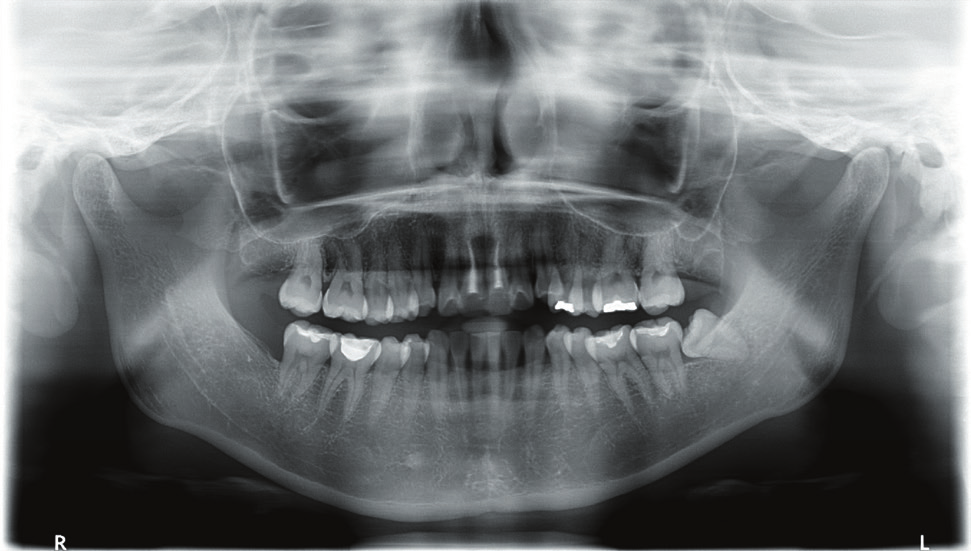
Fig.1 The left third molar was mesially inclined and caries was observed in the distal cervical area of the left second molar.
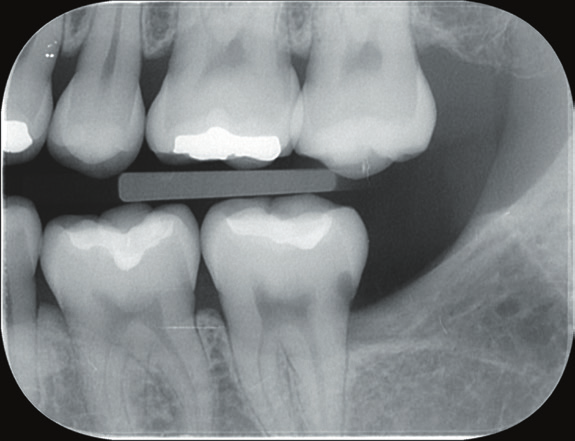
Fig.2 Dental X-ray after extraction of the left third molar. Caries was observed in the distal cervical area of the left second molar.
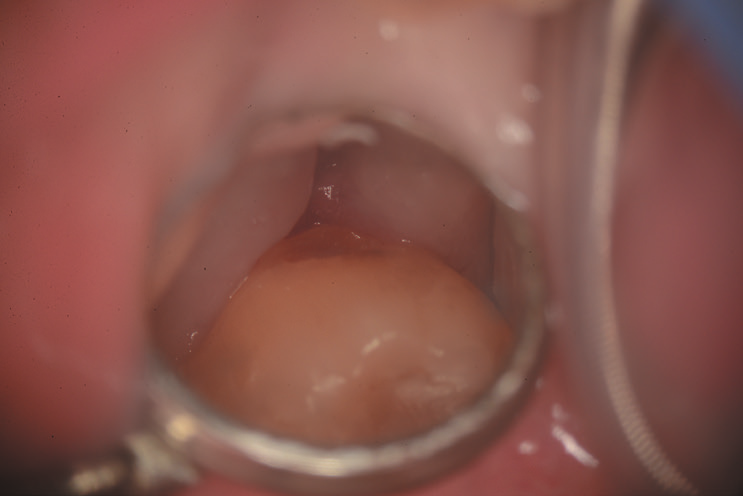
Fig.3 Two weeks after the extraction of the left third molar. Caries was observed in the distal cervical area of the left second molar.
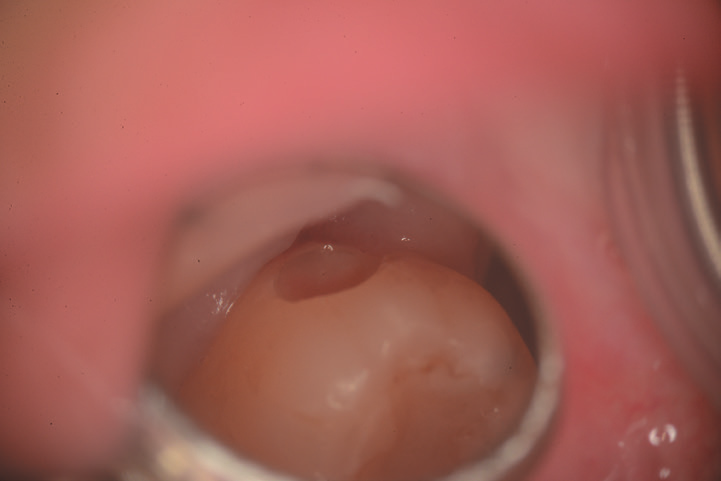
Fig.4 The infected dentin was removed. It was in close proximity to the gingiva.
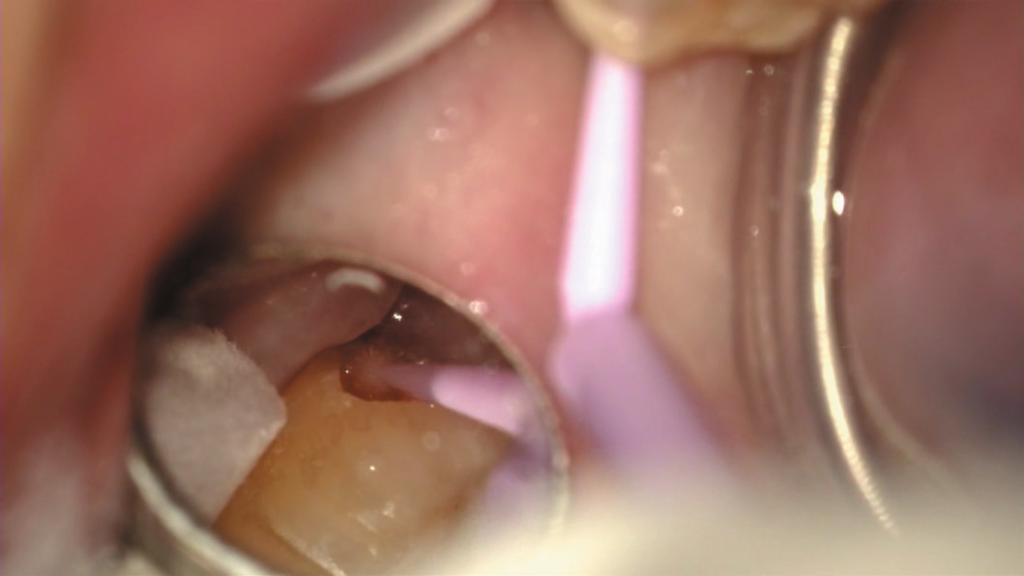
Fig.5 Bonding procedure (BONDMER Lightless).
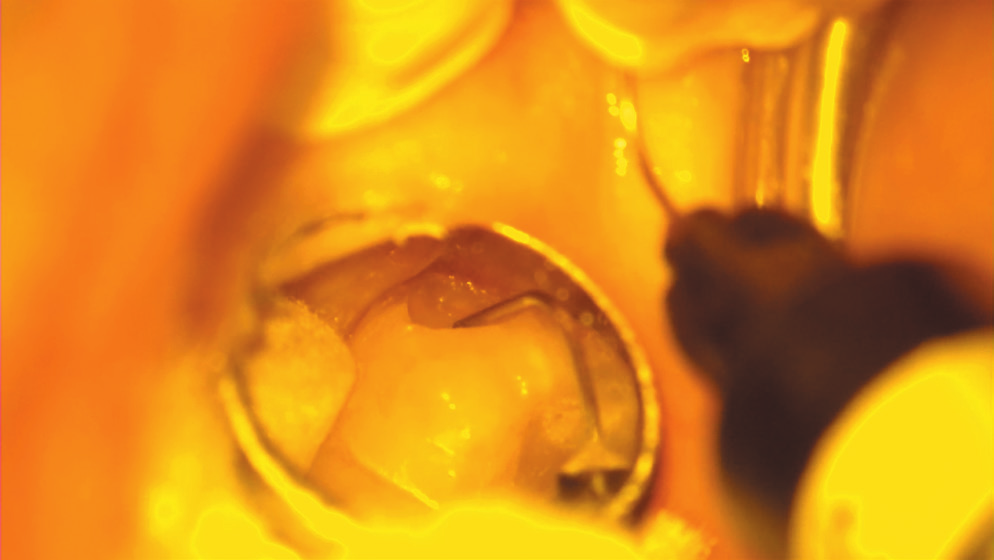
Fig.6 The first layer was filled with ESTELITE UNIVERSAL FLOW High (A1), which has a good cavity adaptation at the base of the cavity.
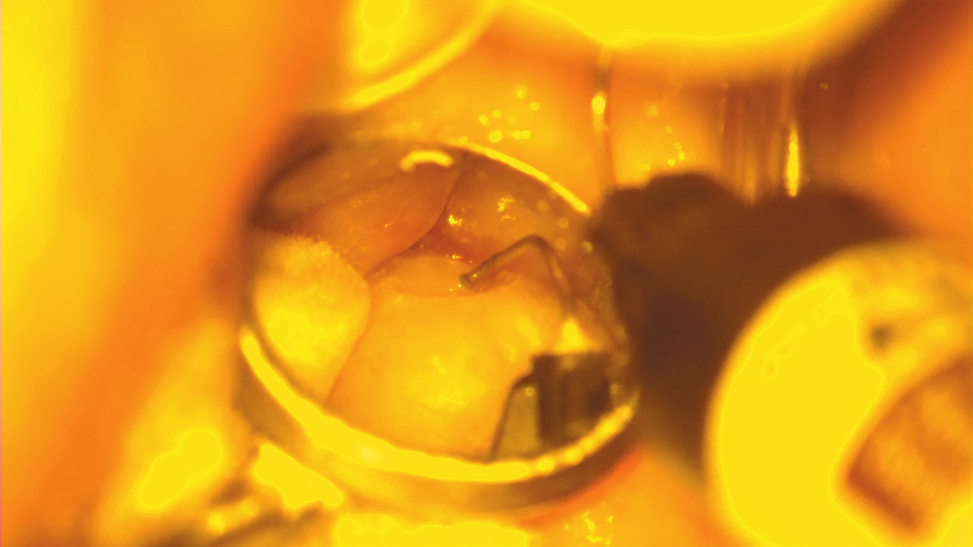
Fig.7 From the second layer onward, filling was done with ESTELITE UNIVERSAL FLOW Medium (A1), which has moderate flowability. The cavity was carefully filled to avoid overflow. ESTELITE UNIVERSAL FLOW has non-sticky consistency with minimal stringiness and is non-slumping, allowing it to be filled without overflowing onto areas outside the cavity or onto the gingiva.
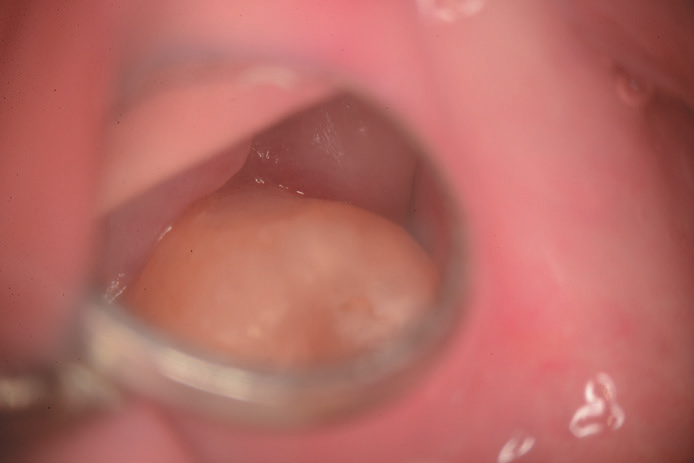
Fig.8 After the filling was completed.
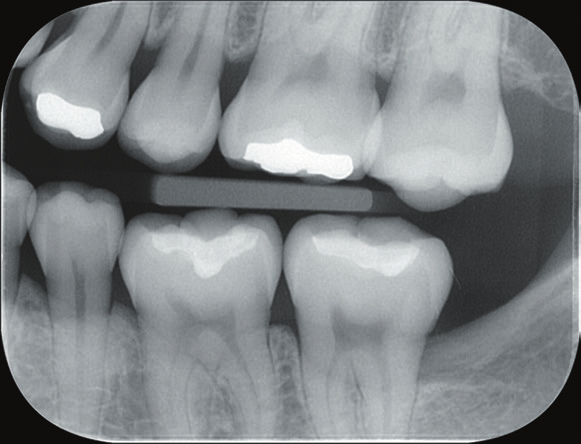
Fig.9 Post-filling dental X-ray. The marginal fit was good.